
Operations · Underground Mining
Beneath the Copperbelt.
Where the work begins.
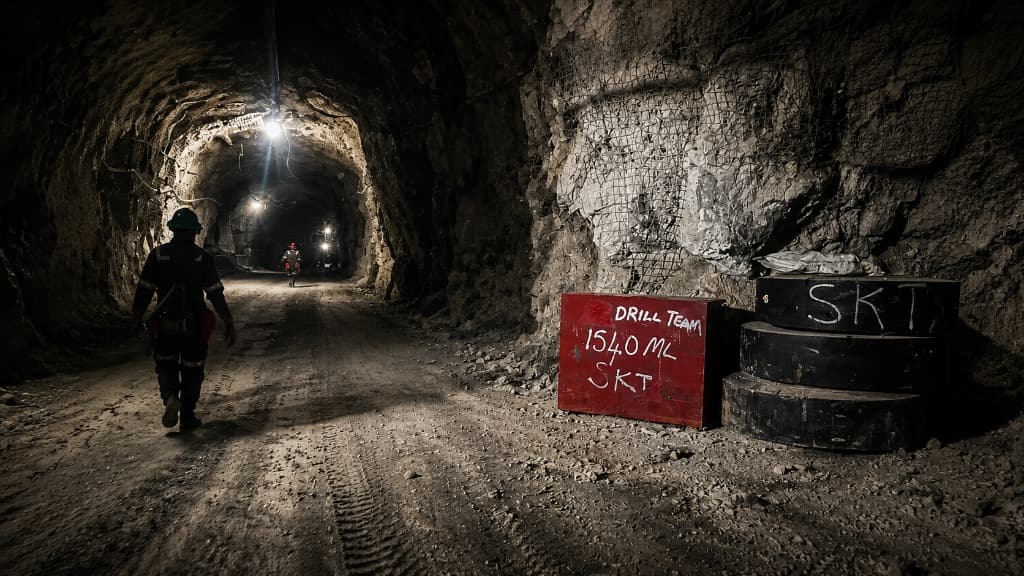
Underground mining is a discipline of patience, precision, and accountability. At SKT Global, every meter of rock we move below the surface is governed by engineered safety controls, third-party-verified standards, and a workforce that calls this land home.
The work below.
Why underground
Some of the world's richest copper deposits sit hundreds of meters below the Copperbelt. Surface mining cannot reach them - only mechanised underground operations can. We operate where the ore body demands depth, not where convenience suggests width.
How we operate
Our approach uses sub-level open stoping and room-and-pillar methods, depending on rock conditions. Drilling rigs cut precise holes, controlled blasting fractures the ore, and load-haul-dump (LHD) vehicles transport material to the shaft for surface processing.
Why mechanisation matters
Mechanised mining is safer than traditional methods. Workers operate from enclosed cabins with environmental controls, not from exposed positions. Machines do the heavy lifting. People focus on judgment, supervision, and engineering decisions.
From ore body to surface - a six-stage process.
Geological Survey
Core drilling and 3D modelling identify ore body geometry, grade, and surrounding rock conditions before any development begins.
Shaft & Decline Development
Vertical shafts or declining tunnels are constructed to provide access, ventilation, and ore transport routes between surface and ore body.
Drill & Blast
Controlled blast designs fracture rock in pre-planned sequences. Blast vibration monitored to protect surrounding infrastructure and communities.
Load, Haul, Dump
Mechanised LHD vehicles transport ore from the face to ore passes or directly to the shaft hoist for surface delivery.
Ground Support
Rock bolts, mesh, and shotcrete stabilise excavated areas. Ground monitoring systems detect movement before it becomes a hazard.
Backfill & Closure
Mined-out voids are backfilled with cemented tailings to maintain ground stability and support future rehabilitation of the surface above.
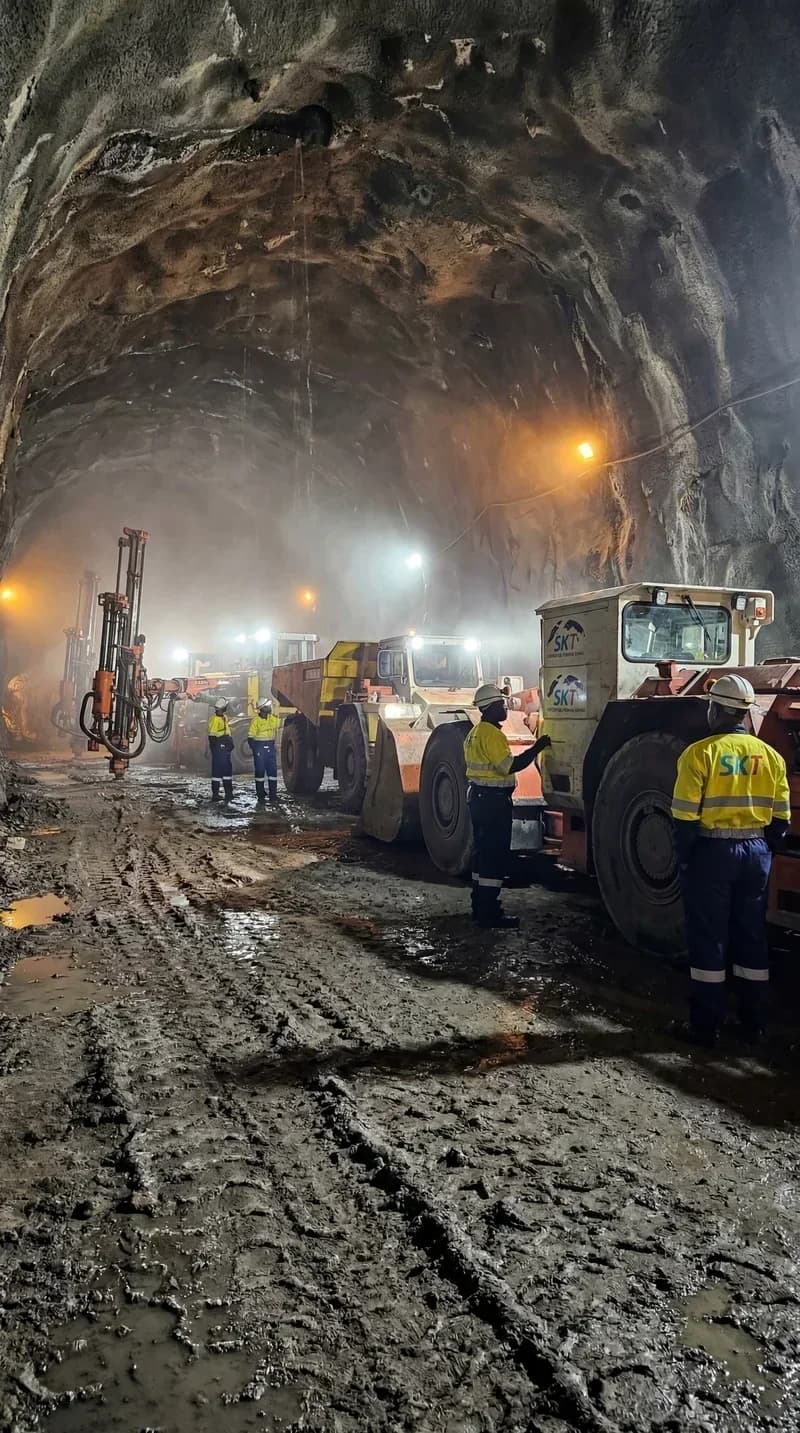
Fig. 01 — Mechanised LHD Vehicle at the Production Face
Independently verified ore inventory.
Estimates compiled in accordance with the JORC Code (2012) and reviewed by independent Competent Persons. Figures are reported as of 31 December 2025.
| Category | Tonnage | Grade | Contained Metal |
|---|---|---|---|
01Proven Reserves | 12.4 Mt | 2.1% Cu | 260 kt Cu |
02Probable Reserves | 18.7 Mt | 1.8% Cu | 337 kt Cu |
03Measured Resources | 15.2 Mt | 2.3% Cu | 350 kt Cu |
04Indicated Resources | 22.6 Mt | 1.9% Cu | 429 kt Cu |
05Inferred Resources | 31.4 Mt | 1.6% Cu | 502 kt Cu |
[1]Mt = Million tonnes. Cu = Copper. kt = Thousand tonnes.
[2]Mineral Resources are reported inclusive of Mineral Reserves.
[3]Reserve estimates assume long-term copper price of $8,500/tonne.
[4]Full technical report available on request.
The Copperbelt is more than a geological formation.
It is a region with century-old mining heritage, communities whose families have worked these mines for generations, and a workforce that combines deep institutional knowledge with modern technical training. We operate as a guest in this region - and that shapes every decision.
- Operations across Chingola, Kitwe, and Mufulira districts
- Partnership with Mopani Copper Mines under long-term service contracts
- Compliance with Zambia Mining Act (2015) and Mines Safety Department regulations
- Active engagement with Chamber of Mines of Zambia
Value that stays in Zambia.
Mining creates value only when that value circulates locally. We prioritise Zambian suppliers, train Zambian operators into supervisory roles, and reinvest a portion of every contract into the communities where we operate.
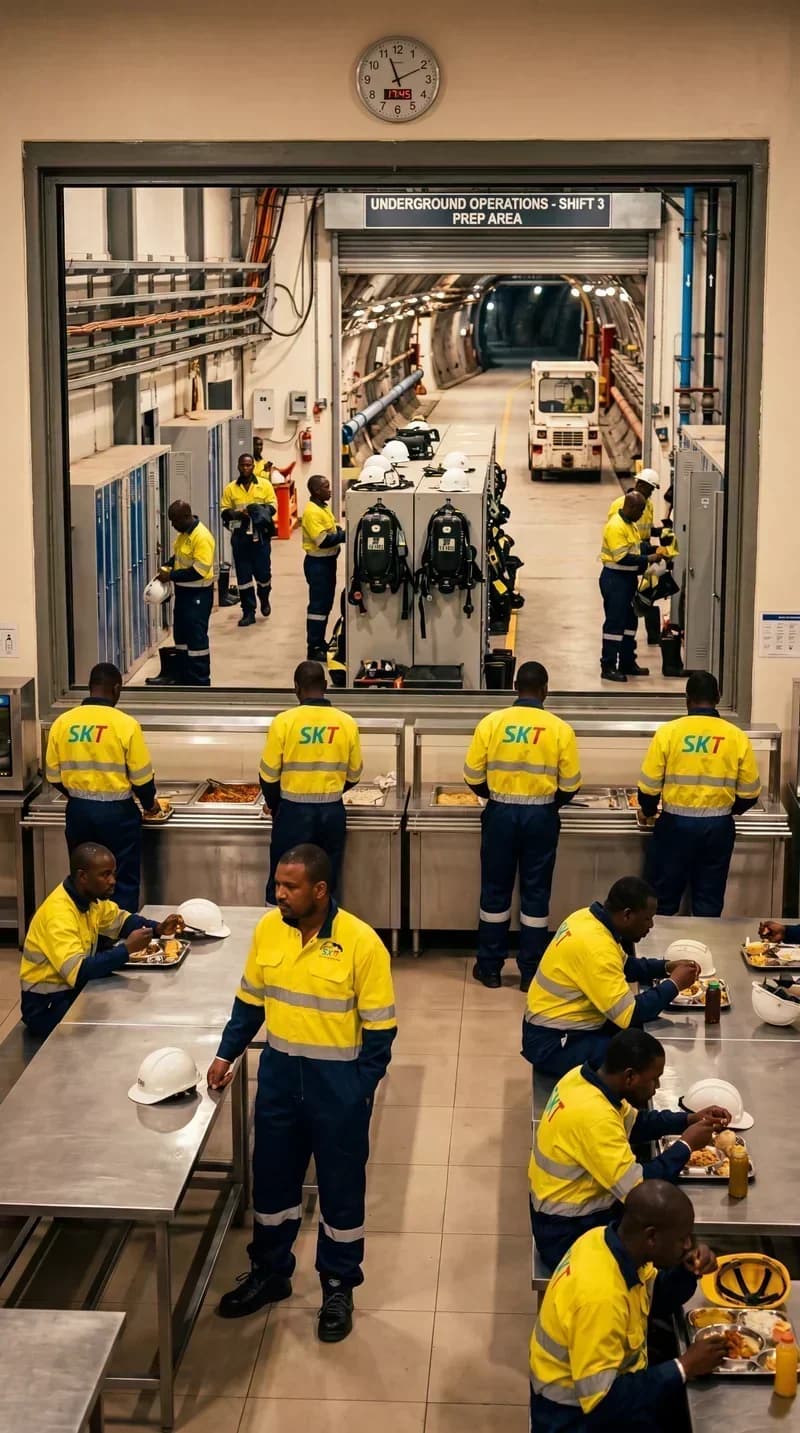
94%
Zambian workforce
$48M
Annual local spend
47
Local SME suppliers
$2.4M
Community investment
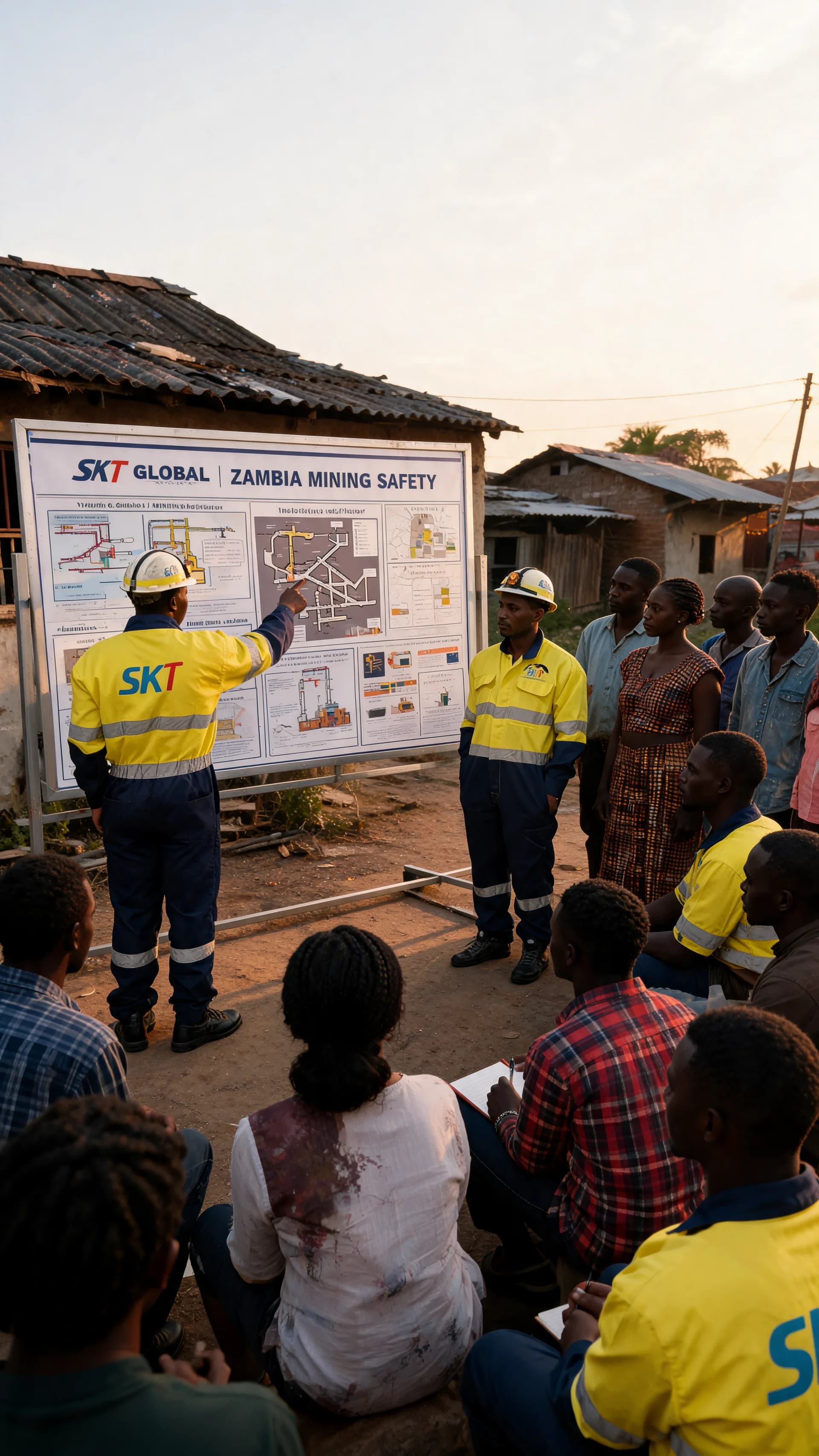
The non-negotiable foundation.
Underground mining carries inherent risk. We do not eliminate that risk - we engineer it down to the lowest achievable level through controls, training, and constant verification.
Engineered Controls
Real-time gas monitoring, automated ventilation, ground movement sensors, and rescue chambers within 5 minutes reach of every active section.
Workforce Health
Mandatory annual medical screening, exposure monitoring for dust and noise, on-site clinic with paramedic team, and mental health support programs.
Compliance
Audited quarterly against international safety standards and Zambia Mines Safety Department standards.
Underground mining, surface responsibility.
Our work happens below ground, but our environmental impact is measured above it. Water use, energy consumption, dust, and rehabilitation are all monitored and reported transparently.
100%
Environmental compliance
47%
Emissions reduction (vs 2024)
340 ha
Land rehabilitated
0
Environmental incidents
What changes underground mining.
Mining hasn't fundamentally changed in 100 years - but the tools have. We invest in technologies that improve safety, reduce environmental impact, and unlock ore bodies that were previously uneconomic.
Tele-remote operations
LHD vehicles operated from surface control rooms, removing workers from hazardous areas during high-risk phases.
Battery-electric haulage
Transitioning diesel fleet to battery-electric vehicles, reducing underground emissions and ventilation requirements.
Digital twin modelling
Real-time 3D models of underground workings allow predictive maintenance and optimised blast designs.